How Liquid Death and e.l.f. Turned an Unlikely Pairing Into a Sold-Out Launch
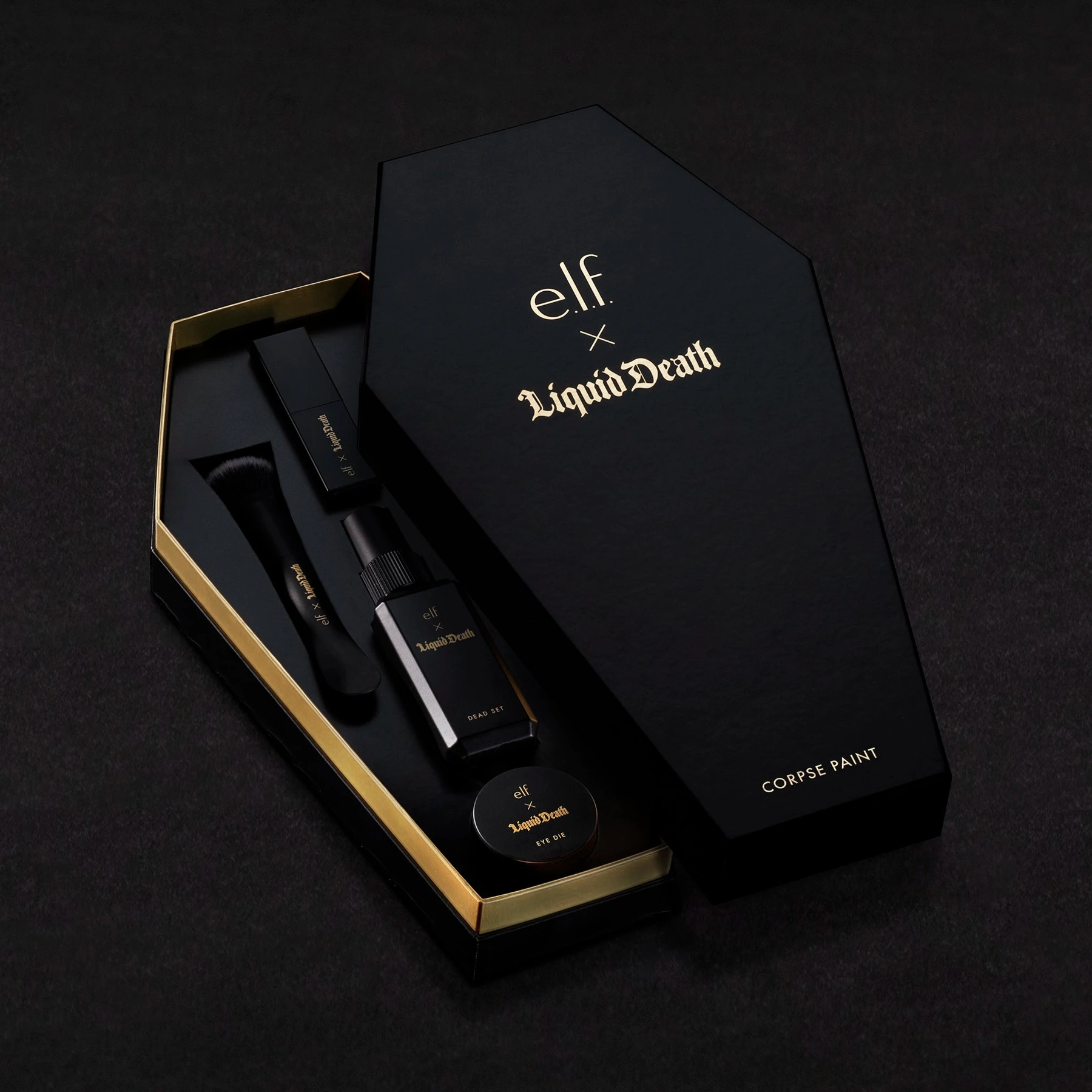
A beauty collaboration with a death wish.
A water brand and a cosmetics company found common ground in black-metal makeup. Then they followed the idea all the way through: a coffin-shaped kit, a supernatural makeover and a launch that put the look into people’s feeds.
- Launched
- March 26, 2024
- The product
- Five-piece makeup vault
- Launch price
- $34
- Available through
- e.l.f. Cosmetics
An unlikely pairing. A familiar ritual.
On paper, Liquid Death and e.l.f. belong in different aisles. Put a black-metal performer in front of a mirror, though, and the connection is easy to see. The white face, black eyes and painted lips are already a makeup routine. Corpse Paint gave the two brands a shared subject that people could understand at a glance.
The limited-edition vault arrived on March 26, 2024, sold exclusively through e.l.f. for $34. Five makeup essentials came inside a keepsake coffin. In the launch announcement, e.l.f.’s Kory Marchisotto framed the partnership around self-expression and a shared appetite for unexpected creative work. Liquid Death’s Andy Pearson pointed directly to the black-metal community’s experience with makeup.
That connection matters. e.l.f. supplied the tools to make the look real; Liquid Death supplied a world in which wearing it felt entirely normal. Each brand had something useful to contribute, and neither needed a long explanation for being there.
The joke was in the box, too.
The packaging committed to the premise. Matte black, gold lettering and a coffin silhouette made the vault feel like a small collectible. Open it and the naming continued: Dead Set for the setting spray, Kiss of Death for the black lipstick, Eye Die for the white cream shadow, Dead Line for the eyeliner and Brush with Death for the applicator.
Those details gave a product photograph plenty to communicate on its own. The coffin established the tone, the names rewarded a closer look, and the products gave buyers a way to take part. The idea survived outside the ad because it was built into the thing being sold.
A makeover from Glothar.
The launch film placed that same idea inside a bright, cheerful beauty commercial. Two friends admire a magazine picture of Glothar, a fictional metal musician. He materializes in the room and helps them apply corpse paint. A visit from Mom turns the makeover into an unexpected family reunion. Marketing Brew described the 55-second spot in its interview with Liquid Death’s creative and marketing leaders.
The contrast does the work: the bedroom, the smiles and the makeover belong to one kind of commercial; Glothar’s face belongs to another. The film gives viewers a story to follow while showing the product in use. By the time the final joke lands, you have seen what the kit is for without sitting through a conventional demonstration.
Taking the look into the feed.
The rollout carried the makeover beyond the film. Marketing Brew reported that creators posted themselves applying the makeup and drinking Liquid Death. Dan Murphy, Liquid Death’s marketing lead, described an intention to make the look recur across someone’s feed: a strange sight once, then again, then again.
Julia Fox also appeared in the makeup while walking her dog in New York. Glossy reported that the March 26 appearance was planned. It gave the campaign a recognizable face and an everyday setting outside the carefully staged commercial.
There is a useful distinction here for anyone planning a launch. The kit, the film and the creator posts each gave people a different way into the same idea. One could be bought, one could be watched and one could be copied. The recognizable makeup held them together.
A fast sellout, and a more interesting conversation.
Glossy reported that the kit sold out in 45 minutes. That is a strong signal of demand for the drop, although the report does not disclose the number of kits available. A sellout time alone cannot tell us the revenue, profit or longer-term effect on either brand.
The launch-day discussion on r/newinbeauty shows why the response is worth reading beyond that headline. Some commenters liked the price, the coffin and the humor. Others questioned whether a small pot of white eyeshadow was practical for painting an entire face; replies from people who had used the shadow praised its texture while acknowledging the size. These are individual reactions, rather than a representative customer survey.
The campaign earned attention with a very clear creative idea. The discussion also returned to ordinary product questions: what is in the box, how much it costs and whether it does the job. Both are part of the story.
Find the thing both brands can make their own.
The part worth borrowing is the specificity. Corpse paint connected a beauty routine to Liquid Death’s existing identity. From there, the team had a rich set of decisions to make: how the kit should look, what the products should be called, who should demonstrate them and how the joke could travel.
For a collaboration brief, that is a useful starting point. Find a behavior, object or ritual both brands have a reason to care about. Then carry it through the product and the campaign with enough detail that people can recognize the idea wherever they encounter it.